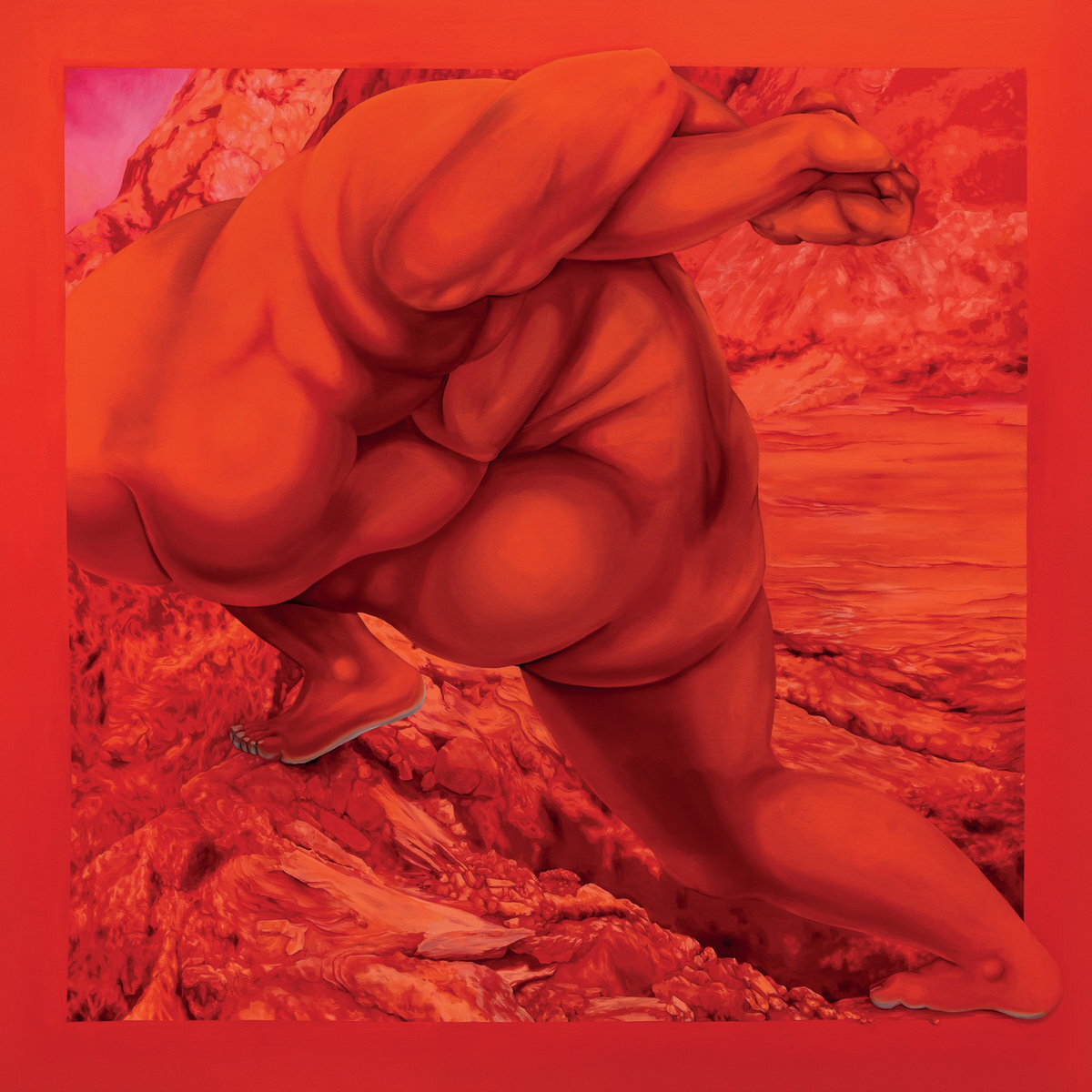
A Catalan composer maps her own hero’s journey across 15 tracks of martial drums, Balinese gamelan, operatic vocals and organic drum and bass.


Marina Hernández López has spent a decade making music that resists any single account of itself. Her previous two albums came out on PAN, a label whose prestige in experimental circles partly insulates its artists from having to justify their choices, and Dja Dja, her fifth album and first self-release, is the sound of someone who has decided she no longer needs that insulation. The record is built from a cardboard diagram she pinned to her studio wall in Barcelona, mapping out harmony, instrumentation, tempo and meter across 15 tracks. She describes the compositional framework as a hero’s journey, followed through an unnamed personal ordeal, then left behind. The album that resulted, she says, is “a giant sudoku.”
That description is more useful than it first sounds. Dja Dja is intricate and rule-bound in a way that many records that claim structural ambition are not. There is a logic to how it moves, from the martial horns and layered vocals of “Siete mares” and “Jaque” through the fracturing center and back toward a more open, contemplative space. It does not feel improvised or instinctive. It feels solved, or mostly solved. The gamelan parts, recorded in Bali with local musicians, arrive at intervals with a ritualistic consistency that anchors the whole thing, preventing the wider eclecticism from pulling apart.
The centerpiece is “Los dos lobos,” which opens with an IDM pulse that sounds like a hunting song from a civilization that never existed, then detonates. A sudden cut silences the soundscape completely before the track resumes in a different register, quieter and more desolate. It is a blunt move, and it lands. The aftermath feels genuinely earned rather than staged. Later, “Hay ángeles” strips everything back to a simple acoustic ballad and sits there, the album’s most exposed and plainest moment, which is precisely why it works.
Herlop’s voice is the record’s central instrument, though calling it that undersells how strangely she uses it. Her lyrics draw on an invented language that pulls from Catalan, Spanish, Japanese and constructions of her own, and the tracklist reflects this: “Flor de los precipicios” sits alongside "ツラ" and “You’ve Lost Your Muchness.” The disorientation is deliberate. She has said she would rather hand the picture back to the listener, and the album’s refusal to settle in any single linguistic or cultural context is part of that. You are not supposed to feel entirely at home.
Not everything sustains the pressure. “Bliss” is the most conventionally club-facing track and strains a little under the narrative weight it is asked to carry, as if the album needed a resolution it could not quite provide. The closer, “Muy heladas,” does not fully deliver on the scale the preceding 14 tracks have built toward. An album this architecturally deliberate probably has a right ending somewhere, and the one Herlop has chosen is not quite it.
But these are small complaints against something genuinely uncommon. Dja Dja is a record made from a conviction that density and playfulness are compatible, that classical training and drum and bass rhythms and Balinese percussion can coexist without cancelling each other out, and that the listener does not need the method explained to them. The “giant sudoku” framing is a joke, but it is also an honest description of how Herlop works: fitting pieces into a structure with rules she has set herself, then presenting only the finished grid, not the workings.
Dja Dja is out now on Bandcamp.


;)
;)
;)
;)
Enter your email address below to stay up to date with Absolute Loss new and announcements.

© Absolute Loss 2026.